
In short: Even a small family investment company can build competitive advantage: focus, a clear strategy, brand, openness, professional reporting, networks, expertise and agility.
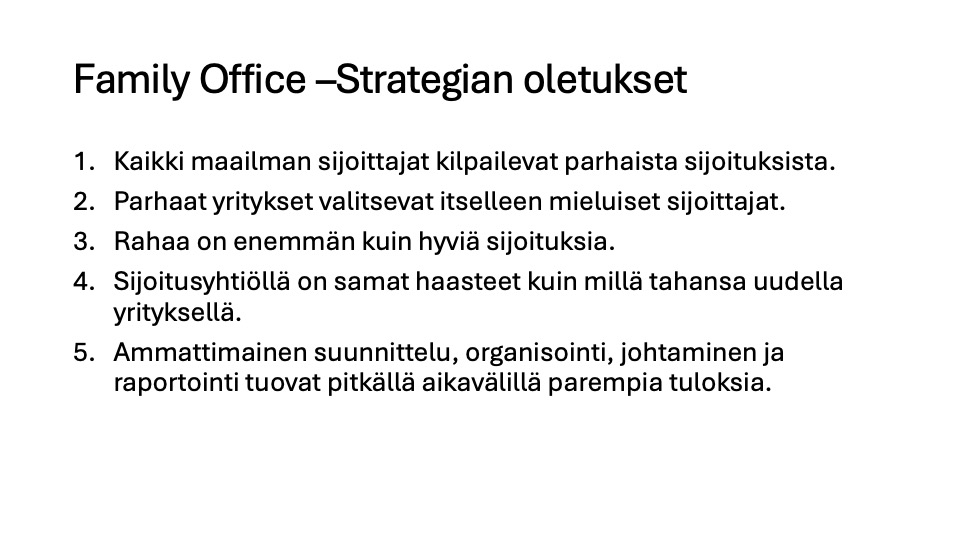
I was asked for a summary of my earlier post “Family Office strategy”. Here it is. The starting point was a long reflection on how an investment company competes for the best investments. The assumptions were these:
And the summary:
Building the competitiveness and competitive advantage of a family investment company (summary)
Even if a family-owned investment company (family office) is small, it can build competitive advantage by investing in key areas.
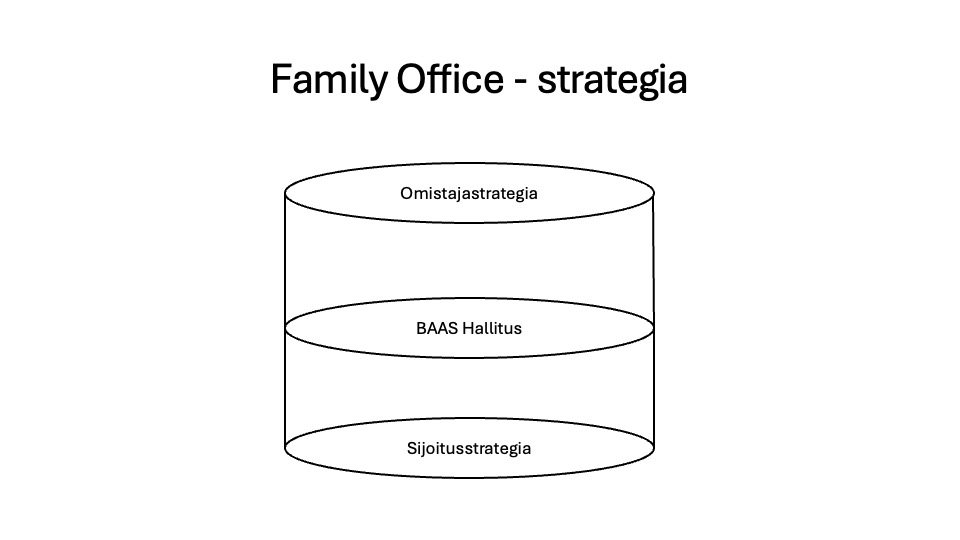
1. Focus and specialisation
Precise targeting: a clearly defined industry or style focus deepens the company’s expertise. A specialised player knows the trends, risks and opportunities of its chosen area better than generalist investors. Focus also lets the company use the family’s particular strengths and find its competitive edge: it operates in a sector where its skills and resources beat the competition.
2. A clear investment strategy
A roadmap to success: a well-defined investment strategy clarifies the company’s goals and principles and steers every investment decision consistently towards long-term aims. Following the strategy with discipline prevents chasing trends and keeps the work on the agreed course. Consistent, long-term action signals professionalism and builds trust, setting the company apart from competitors.
3. Brand and credibility
A reputation that builds trust: even a small company needs a strong brand, a trustworthy reputation. In investing, trust opens doors, and a known player gets into deals an anonymous competitor wouldn’t. Family ownership creates a natural basis for credibility, but reputation only grows through consistent evidence: keeping promises and acting according to your values build trust capital. A good reputation attracts both entrepreneurs and partners, while a bad one weakens your competitive position.
4. Open communication
Visibility and trust through openness: continuous open communication, such as regular newsletters, updates and blog posts, keeps a small investment company visible and shows its expertise to stakeholders. Openness builds trust: when the company shares its plans honestly, it is seen as transparent and reliable. Active communication also acts as a magnet for the right contacts, attracting entrepreneurs and partners who recognise the value the company offers.
5. Professional reporting
With the grip of a big player: even a small company should report on its finances like a large one. Comprehensive annual reports and regular reviews create an image of professionalism and increase credibility. When key figures and results are presented openly, stakeholders can trust there are no nasty surprises hidden away. Top-class reporting sets a small player apart: it builds investors’ trust and can speed up partnership negotiations.
6. Networks and partnerships
The power of networks: good contacts are extremely valuable in investing, and a small family company can get a head start by investing in networks and partnerships. Being in the right circles makes sure the company hears about new opportunities among the first, sometimes before they are even on offer. Through partnerships the company can join forces with others in bigger projects, so even small players reach economies of scale and sources of information close to those of big competitors, which strengthens their position.
7. Expertise
Know-how as capital: the family’s deep industry knowledge is valuable capital. The company offers its targets “smart money”: experience, advice and contacts alongside capital. Special expertise increases the investor’s credibility and makes the family company a sought-after owner. Entrepreneurs prefer investors who know their industry and add value to their growth.
8. Agility
Speed and flexibility: a small organisation is often more agile and faster to decide than large companies, because the lack of bureaucracy and the owners’ presence at the table let it seize opportunities quickly. Agility also shows in a flexible investment horizon: unlike funds, a family company doesn’t have to exit within a set time but can hold its investments as long as needed and sell only at the right moment. Groundwork done in advance makes sure speed doesn’t turn into haste. Combined with considered action, agility gives even a small company a clear competitive advantage.
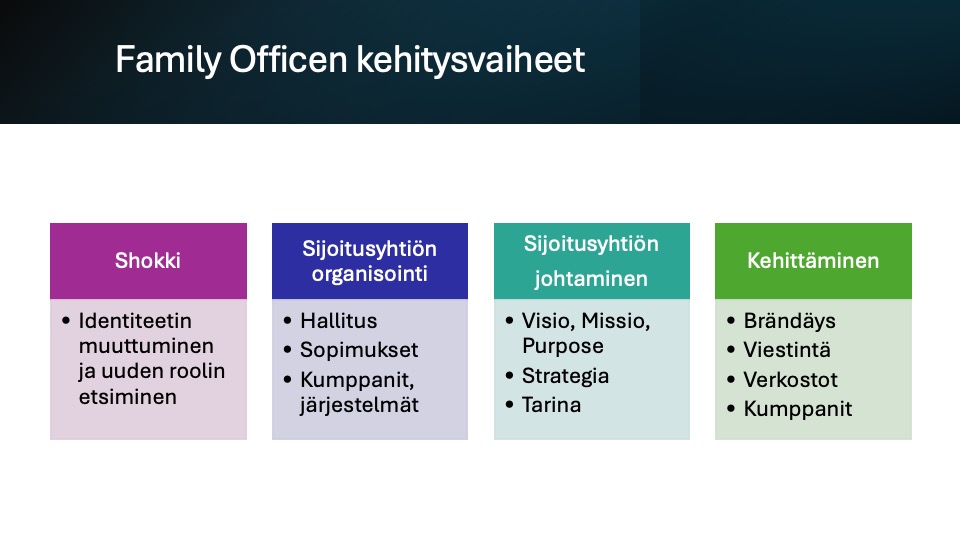
Four stages in building a family investment company:
The original, longer version: Family Office strategy.
Read also: Virtual Family Office – the family investment company and Aura Boards.


Kirjoita kommentti