
In short: The biggest mistake in board work is flying at the wrong altitude. Why it is a question of situation, not opinion, and how AI turns it into a dial.
The biggest mistake in board work is the wrong flight altitude. I have seen it in hundreds of meetings over three decades. The board philosophises about vision while the cash runs out in six weeks. Or the other way round: the board micromanages the sales pipeline even though the company is making a record result and needs a view of the next five years.
Flight altitude is not a matter of opinion. It is a matter of situation.
In a cash crisis the board comes down close to operations. A weekly rhythm, cash flow at daily level, constant contact with management. I wrote about this back in the spring of the pandemic: a backward-looking reporting board that rarely meets is almost worthless in a crisis. In a crisis the board and management form one working group whose only task is to secure the company’s ability to operate. Distance is then a luxury you can’t afford.
When daily operations and results are in order, the board rises like a drone. A bird’s-eye view, the big development themes, the next strategy period, corporate transactions, internationalisation. Interfering with operations is then harmful. Good management deserves space, and the board’s value comes from scanning tomorrow, not picking apart yesterday.
Everyone knows this. Still, most boards fly at the wrong altitude. Why?
Adjusting altitude requires three things few boards have:
- Transparency. A real-time picture of the company’s situation. Not a month-old report finished the night before the meeting.
- Control at the right scale. Supervision is the board’s legal duty, but its intensity must move with the situation. Tight in a crisis, light in growth.
- Governance that flexes. The annual calendar and meeting rhythm are a frame, not a cage. Six meetings a year is a governance model, not a leadership model.
And here we get to the point. Traditional document-based board work cannot adjust its altitude. When information travels in PowerPoints and PDF attachments, the board always sees the company with a delay and always through someone’s prepared lens. Changing altitude takes months, because every descent requires a new reporting round.
AI-assisted operating models change this. When owner, board and management share the same data, individual documents die. The monthly report is no longer a document but a view. The forecast is not an attachment but a continuously updated state. The company is led from a forward-looking, real-time situation room: strategy, finance, market and experience in the same picture, scenarios ready before the question is even asked.
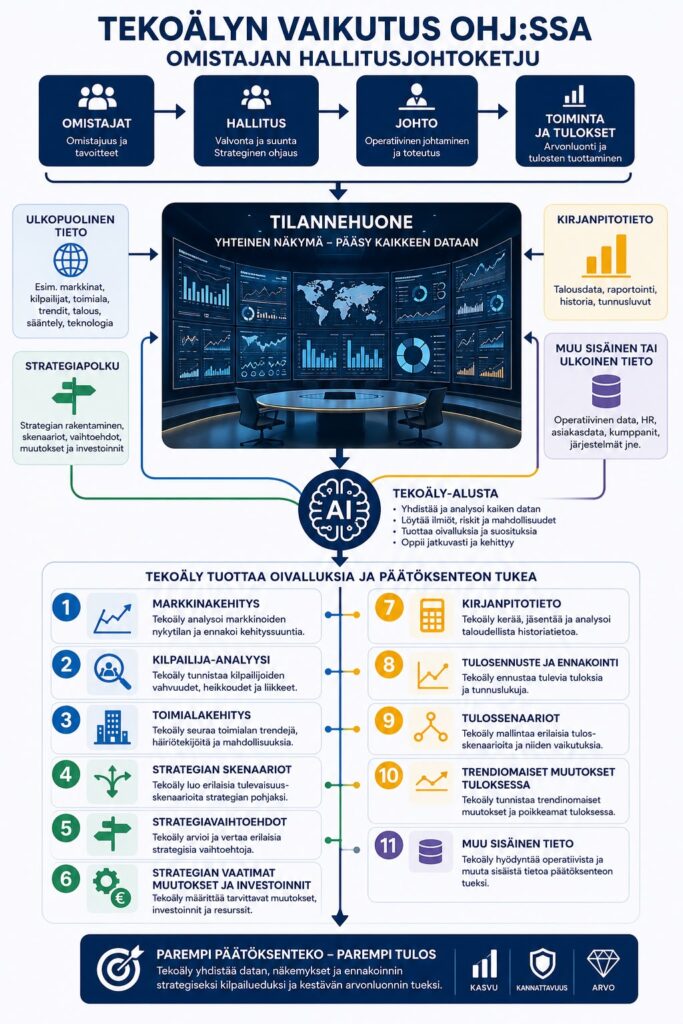
Then altitude is no longer a structural choice but a dial. The same situation room serves day-level crisis management and the bird’s-eye view of growth. The board can descend in an hour and climb back up when the situation allows. The machine calculates, the human decides.
I claim that in five years boards won’t be told apart by how many meetings they hold, but by how quickly they can change altitude.
At what altitude is your board flying right now – and is it a choice or chance?
V
Read also: Good board work 2026 – the board as a service and an operating system for growth and Aura Boards.
Kirjoita kommentti